Hurricane Idalia pummels Florida, churns on to Georgia
AFP
31 Aug 2023 10:52 AM
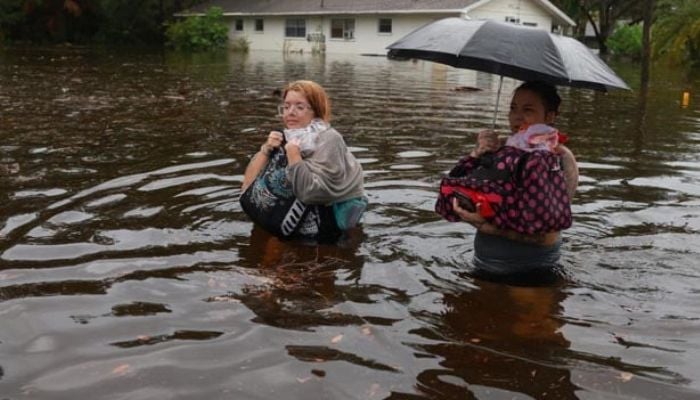
Mass evacuations were ordered for thousands of Floridians
Idalia roared across Florida Wednesday as a dangerous and
powerful hurricane, bringing potentially catastrophic storm surge to coastal
communities and knocking out power to thousands as the storm swept through the
southeastern United States.
As it barreled into neighboring Georgia, Idalia weakened to
a tropical storm that nevertheless was drenching the region with up to 10
inches (25 centimeters) of rain and bringing life-threatening inundations from
rising water moving inland, officials said.
They described Idalia and its potentially deadly
high-surging waters as a once-in-a-lifetime event for the area of northwest
Florida most affected.
While there were no immediately confirmed deaths, Florida
Governor Ron DeSantis stressed "that very well may change," given the
storm's magnitude.
State officials said first responders including search and
rescue teams were operational, but warned it could take time to reach more
remote areas blocked by fallen trees or high water.
Idalia struck as an "extremely dangerous" Category
3 hurricane in Florida's marshy, sparsely populated Big Bend area around 7:45am
(1145 GMT), the US National Hurricane Center (NHC) reported.
The storm crashed ashore packing maximum sustained winds of
approximately 125 miles (215 kilometers) per hour near the community of Keaton
Beach, with a possible storm surge of up to 16 feet (about five meters) in some
coastal areas, the NHC said.
Though Idalia weakened to a Category 1 hurricane and
eventually a tropical storm with winds of 70 miles per hour as it moved over
Georgia, authorities warned residents of the aftermath, and the dangers of high
tide.
The NHC said water levels were more than six feet above
normal in Cedar Key, a string of Florida islands jutting into the Gulf of
Mexico, and warned coastal waters were rising rapidly.
Mass evacuations were ordered for thousands of Floridians,
although many defied authorities and hunkered down.
In Perry, a small town in Idalia's path, emergency crews
were already cleaning up and residents who stayed behind were assessing the
impact.
John Kallschmidt, 76, struggled to push aside a pine tree
that fell on the roof of his small wooden house.
"It got pretty scary with all the trees blowing over
and coming down," he told AFP. "But it's the way it is, it's life in
Florida. You have to get accustomed to this kind of thing."
In coastal Steinhatchee, about 20 miles south of Idalia's
landfall, streets were mostly deserted, while the flooded main road appeared as
an extension of the town's river.
Patrick Boland, 73, who was out surveying damage, said: "It was a little windy, the trees were coming down in my front yard, but other than that, the house is fine."
Speedy storm
In the Tampa Bay area – a metropolitan zone of some three
million people – streets were submerged and flood waters swept across yards.
Just north in the city of Tarpon Springs, residents waded,
or even canoed, to safety as homes and apartments were inundated.
DeSantis told reporters that Idalia moved faster than some
of the more disastrous hurricanes that have hit the state in which the eye of
the storm idled along the coastline and caused death and severe destruction.
Some 2,50,000 customers in Florida and 2,30,000 in Georgia
were without electricity as of 6:00 pm, according to tracking website
PowerOutage.us.
Power was also out for about 14,000 customers in South
Carolina, where hurricane warnings remained in effect Wednesday evening and the
NHC has forecasted flooding.
Some Floridians though suggested they had dodged a bullet
with Idalia's projected ferocity diminished.
"We were really spared and blessed," Sheriff
Robert McCallum of Levy County, just south of the landfall zone, told a
briefing, saying the storm surge was "not near what we had expected."
But President Joe Biden warned the threat was not over.
"The impacts of the storm are being felt throughout the
southeast," he said at the White House. "We have to remain
vigilant."
The Federal Emergency Management Agency deployed more than
1,000 emergency personnel to the disaster zone.
"Idalia is the strongest storm... to make landfall in
this part of Florida in over 100 years," FEMA Administrator Deanne
Criswell said.
Airport reopens
Tampa International Airport, which closed as Idalia
approached, announced it reopened as of 4:00 pm for arriving flights, and that
full service was set to resume early Thursday.
The storm dealt aglancing blow to Cuba before moving over
the Gulf of Mexico, which scientists say is experiencing a "marine heat
wave" – energizing Idalia's winds as it raced towards Florida.
Record-breaking temperatures off Florida are expected to
amplify Atlantic storms this season, with scientists blaming human-caused
climate change for the overall warming trend.
Hotter sea surfaces impart more energy on the air above
them, packing more punch into storm winds.
"These storms are intensifying so fast that our local
emergency management officials have less time to warn and evacuate and get
people to safety," Criswell told the Wednesday press conference.
/KN/

