Typhoon Saola weakens but still a threat in southern China
AFP
02 Sep 2023 09:54 AM
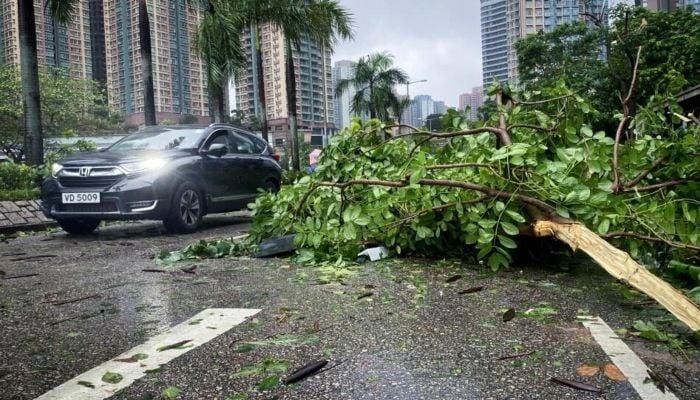
Typhoon Saola moved towards southern China Saturday as a weakened but still dangerous threat that lashed Hong Kong and forced millions to hunker down. AFP Photo
Typhoon Saola swept across southern China on Saturday after
tearing down trees and smashing windows in Hong Kong, although the megacity
avoided a feared direct hit from one of the region's strongest storms in
decades.
Tens of millions of people in the densely populated coastal
areas of southern China had sheltered indoors on Friday ahead of the storm.
Saola had triggered the city's highest threat level in Hong
Kong on Friday evening – which had only been issued 16 times since World War
II.
It was downgraded before dawn on Saturday after the typhoon
passed the city, with no reported casualties, and tracked towards coastal areas
of mainland China.
However authorities warned people to remain on alert, with
strong winds and storm surges still a threat.
"Gale force winds are still affecting some places...
precautions should not yet be relaxed," said the city's weather
observatory at 8 am (0000 GMT).
Saola was still packing sustained winds of 145 kilometres
per hour at its centre, creating a storm surge that caused rough swells around
Hong Kong's waterfront areas.
The last time Hong Kong issued a T10 warning was in 2018,
when Typhoon Mangkhut slammed into the city, shredding trees and unleashing
floods, and leaving more than 300 people injured.
In mainland China, Mangkhut killed six people and impacted
the lives of more than three million others.
But by Saturday morning, the damages to Saola in Hong Kong
looked to be far less than Mangkhut.
AFP journalists in the city reported fallen trees, broken
windows and solar panels pulled off rooftops.
Overnight Saola made landfall in the coastal area of Zhuhai
in neighbouring Guangdong province, and is expected to weaken as it moves along
the southern coastline.
China's national weather office had on Friday warned Saola
"may become the strongest typhoon to make landfall in the Pearl River
Delta since 1949", referring to a low-lying region that includes Hong
Kong, Macau and much of Guangdong province.
Authorities had evacuated more than 7,80,000 people from
high-risk areas, while eastern Fujian province saw more than 1,00,000 moved to
safer ground.
Hundreds of flights were cancelled, businesses closed, and
transportation in and out of the affected areas had been halted.
/KN/

