Crackdown rattles Afghans in Pakistan
AFP
28 Sep 2023 13:03 PM
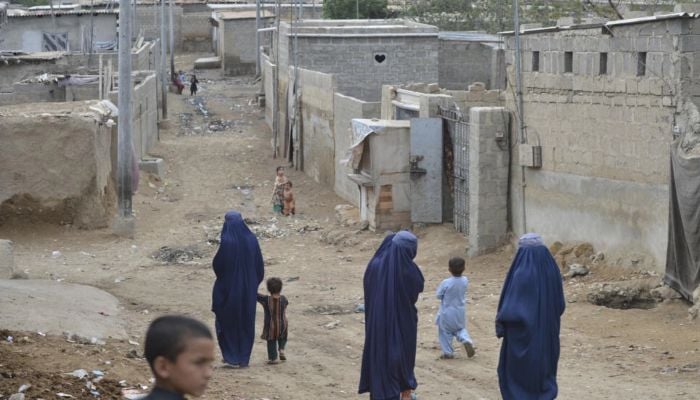
Afghans have poured into Pakistan in their millions during decades of successive wars. AFP Photo
The cow had been slaughtered and bags of rice purchased but
young bride Wahida's nuptials were cut short when her groom was arrested on
their wedding day, one of hundreds caught in a recent crackdown on Afghans
living in Pakistan.
The 20-year-old now lives with her in-laws at the Afghan
Muhajir aid camp in the port mega-city of Karachi but without her
husband-to-be, a registered refugee.
"We are without hope," the groom's mother, Safar
Gul, told AFP. "The police took away our son. What can we do, they have
the power."
Faizur Rehman, 22, was arrested "just because he was
Afghan", another relative named Zulaikha said.
Afghans have poured into Pakistan in their millions during
decades of successive wars, many living in aid camps with restricted access to
education, healthcare and employment.
Around 1.3 million are registered refugees and 8,80,000 more
have legal status to remain in Pakistan, according to the latest United Nations
figures.
Police and politicians have said a recent round-up targets
only those without legal status and is in response to rising crime and poor
regulation of immigration that is straining resources.
At least 700 Afghans have been arrested since early
September in Karachi alone – 10 times more than in August – and hundreds more
in the other cities, according to official police figures.
Afghans say the arrests have been indiscriminate.
They accuse police of extorting money and ignoring legal
documents, while pointing to rising anti-Afghan sentiment as prolonged economic
hardship burdens Pakistani households and tensions rise between Islamabad and
Kabul's new Taliban government.
"We have been working day and night getting people
released," said Habibur Rehman, who fled Afghanistan in the 1980s during
Soviet rule but now represents the Afghan government's refugee ministry at the
camp.
"There have been crackdowns every three, four years,
but this time has been the worst."
'Overwhelming' fear
An estimated 6,00,000 Afghans have arrived since the Taliban
seized power in Kabul in August 2021 and imposed their austere version of
sharia or Islamic law.
Lawyers have said the police operation has been complicated
by registration cards for vast numbers of documented Afghans expiring at the
end of June, although their status remains in place until the government rules
on their renewal.
Naqibullah, who lives in a rudimentary house in the camp,
said he and his father handed over 46,000 rupees ($160) to avoid jail after
they were picked up by police, despite being documented refugees with
permission to legally remain in Pakistan.
They were advised to keep a low profile to avoid re-arrest
and stay away from the kiosk they run outside the camp.
"Leaving our business behind is never an easy decision
but the fear is so overwhelming that I can't even venture out to the market. We
have no choice but to remain at home," he said.
Pakistani lawyer Moniza Kakar said she can do little for
Afghans who do not have documents, and that those recently deported include the
sick and poor, as well as human rights defenders and women students.
More than 1,800 Afghans were deported from Karachi last
year, city police said, and nearly 1,700 have been arrested so far in 2023.
But Kakar, along with the several other lawyers giving free
legal help to Afghans, said the vast majority in this sweep are documented,
compared to roughly a quarter rounded up in past crackdowns.
"Our action is purely aimed at illegal
immigrants," Karachi police chief Khadim Rind told AFP, adding that allegations
of arrests of legal document holders and bribe-taking should be investigated.
'Obeying the law'
Afghan consul general Syed Abdul Jabbar said Afghans in
Pakistan were paying the price for disputes between Kabul and Islamabad.
Relations have soured since the Taliban government seized
power, with a sharp rise in militant attacks along Pakistan's border that
Islamabad alleges are being planned on Afghan soil -- a charge Kabul denies.
A long-running border dispute has also seen key trade
crossings closed for days.
But these issues should be "sorted out at the
negotiating table", Jabber said. "A crackdown on Afghans is the wrong
approach."
The pressure has seen some families sell what they can and
return to Afghanistan, refugee community leaders said. Others were reluctant to
uproot their lives to return to a country mired in its own economic crisis,
despite the end of decades of fighting.
Day labourer Habib has been a refugee in Pakistan for more
than half his life but says he lost his documentation several years ago.
"I have lived with more freedom here than in our own
country," the 76-year-old told AFP.
"We don't have documents and we are afraid they will
give us trouble, but we are obeying the law," he said. "If they don't
forcefully kick us out, we won't go to Afghanistan."
/KN/

