Afghan embassy in India suspends operations
AFP
01 Oct 2023 12:53 PM
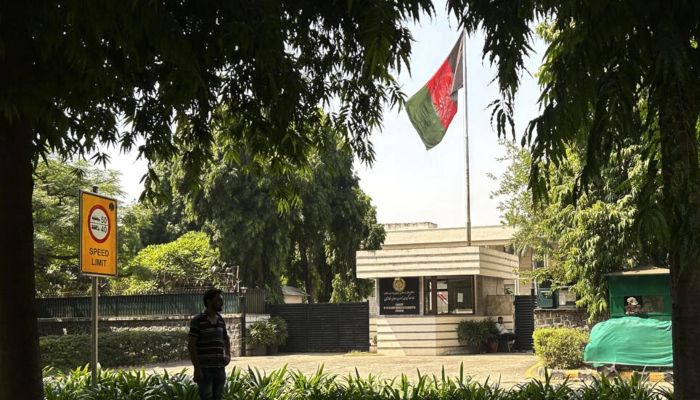
The flag of the previous Afghanistan republic flies over the entrance to the embassy in the Indian capital, New Delhi. AFP Photo
Afghanistan's embassy in India suspended operations on
Sunday, more than two years after the Taliban's return to power in Kabul
following the collapse of the Western-backed government.
Most foreign nations – including India – do not officially
recognise Afghanistan's Taliban government, but acknowledge them as the de
facto ruling authority.
This has left many Afghan embassies and consulates in limbo,
with diplomats appointed by the former government refusing to cede control of
embassy buildings and property to representatives chosen by the Taliban
authorities.
"It is with profound sadness, regret, and
disappointment that the Embassy of Afghanistan in New Delhi announces this
decision to cease its operations," said an embassy statement posted on the
social media platform X.
India will take control of the embassy in a caretaker
capacity, it said.
The unsigned statement said it had been "increasingly
challenging" to continue operations due to cuts in staff and resources,
including a "lack of timely and sufficient support from visa renewal for
diplomats".
The closure follows reports that the ambassador and other
senior diplomats had left India in recent months, with infighting among those
remaining in New Delhi.
But the embassy said in its statement that it
"categorically refutes any baseless claims regarding internal strife"
among staff, and denied any diplomats were "using the crisis to seek
asylum in a third country".
New Delhi evacuated its entire mission from Kabul as the
Taliban closed in on the Afghan capital in August 2021, but last year sent back
a small team to reopen its sprawling embassy.
Most foreign nations similarly withdrew diplomatic staff at
the time and have not returned, although a handful of embassies – including
Pakistan, China and Russia – never closed, and still have ambassadors in Kabul.
Tens of thousands stranded
The change of power in Kabul stranded tens of thousands of
Afghan students, businesspeople and medical tourists across the world.
Most chose not to return, including dozens of Afghan army
cadet officers training at Indian war colleges who feared persecution if they
went back.
Some have gone back, however, with the Taliban authorities
keen to publicise any returns as a sign of faith in their leadership.
The Taliban authorities have full control of around a dozen
Afghan embassies abroad – including in Pakistan, China, Turkey and Iran.
Others operate on a hybrid system, with the ambassador gone
but embassy staff still carrying out routine consular work such as issuing
visas and other documents.
In January last year, Italian police were called to
Afghanistan's Rome embassy after scuffles broke out when a junior diplomat
claimed he had been appointed by the Taliban's leaders to take over from an
ambassador loyal to the former government.
Most senior Afghan foreign ministry officials are currently
in Moscow attending a Russia-brokered conference on the country, and were not
available to comment on the closure of the embassy in New Delhi.
There was no immediate response from India.
/KN/

