France issues arrest warrant for Syria's Assad
AFP
16 Nov 2023 09:36 AM
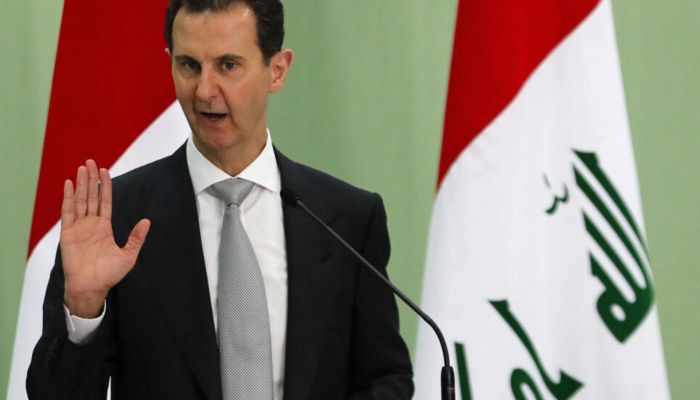
France is holding Assad responsible for crimes against humanity and war crimes. AFP Photo
France has issued an international arrest warrant for Syrian
President Bashar al-Assad, accused of complicity in crimes against humanity
over chemical attacks in 2013, a judicial source and plaintiffs in the case
said Wednesday.
The judicial source told AFP Assad was also suspected of
complicity in war crimes for the attacks, blamed by the opposition on the
regime, that killed more than 1,400 people near Damascus in August 2013.
International warrants were also issued for the arrests of
Assad's brother Maher, the de-facto chief of a Syrian elite military unit, and
two armed forces generals.
The Paris court's unit concerned with crimes against
humanity has been investigating the chemical attacks since 2021.
France claims worldwide jurisdiction for alleged war crimes
and crimes against humanity.
The probe followed a legal complaint filed by the Syrian
Centre for Media and Freedom of Expression (SCM) NGO, lawyers' association Open
Society Justice Initiative (OSJI) and the Syrian Archive, a body documenting
human rights violations in Syria.
'Huge development'
"It's a huge development," SCM president Mazen
Darwish said of the warrant for Assad's arrest.
"An independent jurisdiction is recognising that the
chemical attack couldn't have happened without the knowledge of the Syrian
president, that he has responsibility and should be held accountable," he
told AFP.
The case against Assad and the others was backed by
first-hand witness accounts and deep analysis of the Syrian military chain of
command, Darwish said.
Activists in 2013 posted amateur videos on YouTube said to
show the effects of the attack, including footage of dozens of corpses, many of
them children, stretched out on the ground.
Other images showed unconscious children, people foaming at
the mouth and doctors apparently giving them oxygen to help them breathe.
The scenes provoked revulsion and condemnation around the
globe.
A United Nations report later said there was clear evidence
of sarin gas use.
Syria agreed in 2013 to join the Organisation for the
Prohibition of Chemical Weapons (OPCW) global watchdog and give up all chemical
weapons.
The OPCW has since blamed Damascus for a series of chemical
attacks during the civil war.
The Syrian government has denied the allegations, which have
also sparked legal complaints in Germany and other European countries.
Syria's civil war broke out in 2011 after Assad's repression
of peaceful demonstrations escalated into a deadly conflict that pulled in
foreign powers and global jihadists.
The war has killed more than half a million people and
displaced half of the country's pre-war population.
/KN/

