UN needs $46.4 billion for aid in 'bleak' 2024
AFP
11 Dec 2023 11:56 AM
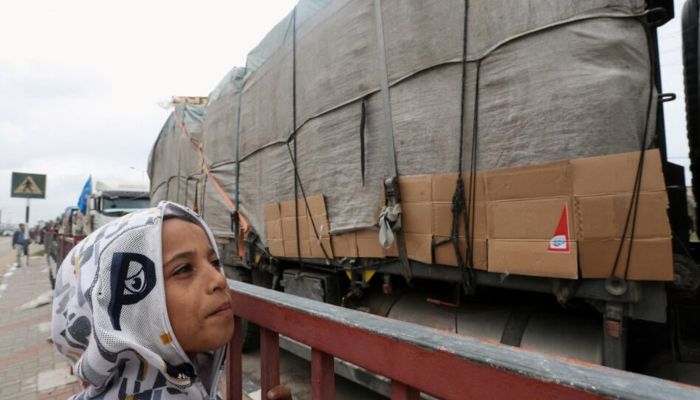
The UN said the global humanitarian outlook for 2024 was "bleak", with conflicts, climate emergencies and collapsing economies "wreaking havoc" on the most vulnerable. Collected Photo
The United Nations said Monday that it needed $46.4 billion
next year to bring life-saving help to around 180 million people in desperate
circumstances around the world.
The UN said the global humanitarian outlook for 2024 was
"bleak", with conflicts, climate emergencies and collapsing economies
"wreaking havoc" on the most vulnerable.
While global attention focuses on the conflict raging in the
Gaza Strip, the UN said the wider Middle East, Sudan and Afghanistan were among
the hotspots that also needed major international aid operations.
But the size of the annual appeal and the number of people
it aims to reach were scaled back compared to 2023, following a decrease in
donations.
"Humanitarians are saving lives, fighting hunger,
protecting children, pushing back epidemics, and providing shelter and
sanitation in many of the world's most inhumane contexts," UN aid chief
Martin Griffiths said in a statement.
"But the necessary support from the international
community is not keeping pace with the needs," he said.
The 2023 appeal was for $56.7 billion but received just 35
percent of that amount, one of the worst funding shortfall in years. It allowed
UN agencies to deliver assistance and protection to 128 million people.
With a few weeks left to go, 2023 is likely to be the first
year since 2010 when humanitarian donations declined compared to the previous
year.
The UN therefore scaled down its appeal to $46.4 billion
this time around, and will focus on those in the gravest need.
72 countries
Launching the 2024 Global Humanitarian Overview, Griffiths
said the sum was nonetheless a "massive ask" and would be tough to
raise, with many donor countries facing their own cost of living crises.
"Without adequate funding, we cannot provide
life-saving assistance. And if we cannot provide that assistance, people will
pay with their lives," he said.
The appeal covers aid for 72 countries: 26 states in crisis
and 46 neighbouring nations dealing with the knock-on effects, such as an
influx of refugees.
The five largest single-country appeals are for Syria ($4.4
billion), Ukraine ($3.1 billion), Afghanistan ($3 billion), Ethiopia ($2.9
billion) and Yemen ($2.8 billion).
Griffiths said there would be 300 million people in need
around the world next year – a figure down from 363 million last year.
But the UN aims to reach only 180.5 million of those, with
NGOs and aid agencies targeting the remainder – not to mention front-line
countries and communities themselves who provide the first help.
Climate impact
The Middle East and North Africa require $13.9 billion, the
largest total for any region in 2024.
Beyond Syria, the Palestinian territories and Yemen,
Griffiths also pointed to Sudan and its neighbours, and to Ukraine,
Afghanistan, Venezuela and Myanmar as hotspots that needed sustained global
attention.
Ukraine is going through a "desperate winter" with
the prospect of more warfare on the other side, he said.
With the Gaza war between Israel and Hamas, plus Russia's
war in Ukraine, Griffiths said it was hard for the Sudan crisis to get the
attention it deserved in foreign capitals.
More broadly, Griffiths said climate change would
increasingly impact the work of humanitarian aid workers, who would have to
learn how to better use climate data to focus aid resources.
"There is no doubt about the climate confronting and
competing with conflict as the driver of need," he said.
/KN/

