Attacks kill at least 160 people in central Nigeria
AFP
26 Dec 2023 09:23 AM
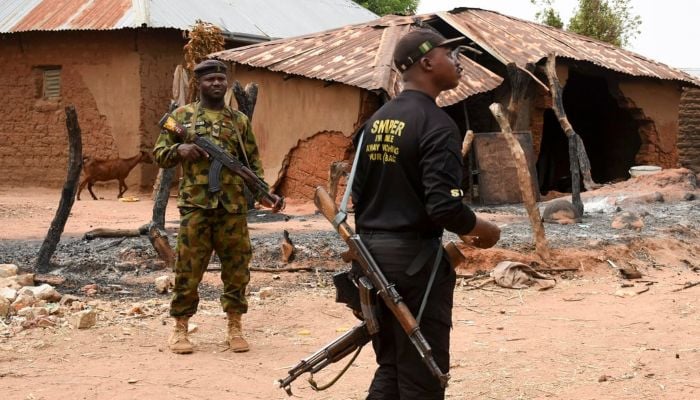
Armed groups have killed at least 160 people in central
Nigeria in a series of attacks on villages, local government officials said on
Monday.
The toll marked a sharp rise from the initial figure
reported by the army Sunday evening of just 16 dead in a region plagued for
several years by religious and ethnic tensions.
"As many as 113 persons have been confirmed killed as
Saturday hostilities persisted to early hours of Monday," Monday Kassah,
head of the local government in Bokkos, Plateau State, told AFP.
Military gangs, locally called "bandits", launched
"well-coordinated" attacks in "not fewer than 20 different
communities" and torched houses, Kassah said.
"We found more than 300 wounded people" who were
transferred to hospitals in Bokkos, Jos and Barkin Ladi, he said.
A provisional toll by the local Red Cross reported 104
deaths in 18 villages in the Bokkos region.
At least 50 people were also reported dead in several
villages in the Barkin Ladi area, according to Dickson Chollom, a member of the
state parliament.
He condemned the attacks and called on the security forces
to act swiftly.
"We will not succumb to the tactics of these merchants
of death. We are united in our pursuit of justice and lasting peace,"
Chollom said.
'Barbaric'
The attacks which started in the Bokkos area spilled into
neighbouring Barkin Ladi where 30 people were found dead, according to local
chairman Danjuma Dakil.
On Sunday, Plateau State Governor Caleb Mutfwang condemned
the violence, calling it "barbaric, brutal and unjustified".
"Proactive measures will be taken by the government to
curb ongoing attacks against innocent civilians," said Gyang Bere, the
governor's spokesperson.
Gunfire could still be heard on late Monday afternoon,
according to a source from the region, which is on the dividing line between
Nigeria's mostly Muslim north and mainly Christian south.
Markus Amorudu, a resident of Mushu village, said people
were sleeping when shots rang out.
"We were scared because we weren't expecting an attack.
People hid, but the assailants captured many of us, some were killed, others
wounded," he told AFP.
Amnesty International criticised the government in the wake
of the attacks, saying "the Nigerian authorities have been failing to end
frequent deadly attacks on rural communities of Plateau state," in a post
on X, formerly Twitter.
Northwest and central Nigeria have been long terrorised by
bandit militias operating from bases deep in forests and raiding villages to
loot and kidnap residents for ransom.
Competition for natural resources between nomadic herders
and farmers, intensified by rapid population growth and climate pressures, has
also exacerbated social tensions and sparked violence.
A jihadist conflict has raged in northeastern Nigeria since
2009, killing tens of thousands of people and displacing around two million, as
Boko Haram battles for supremacy with rivals linked to the Islamic State group.
President Bola Ahmed Tinubu, a former Lagos governor elected
in February in a highly contested ballot, has promised to attract more
investment to Africa's largest economy and most populous country in a bid to
tackle its persistent security challenges.
/KN/

