Cuba hikes fuel prices by 500%
AFP
10 Jan 2024 11:38 AM
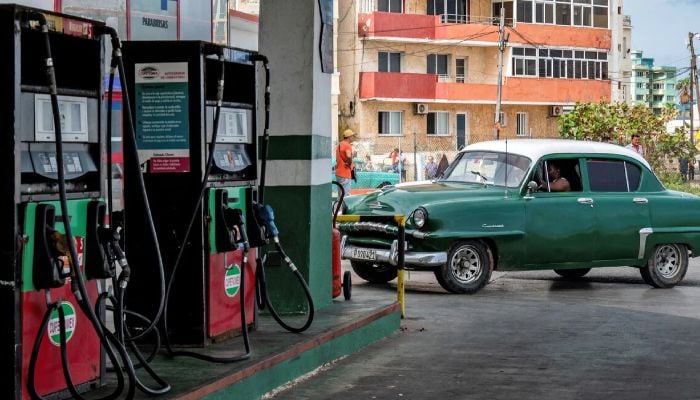
AFP File Photo
Already under the yoke of inflation and product scarcity,
many Cubans don't know how they will cope with a new 500-per cent surge in the
fuel price.
The communist island's cash-strapped government announced
the five-fold increase Monday with effect from February 1, as part of a series
of measures seeking to cut its budget deficit.
The cost of a liter of regular gasoline will rise from 25
pesos (20 US cents) to 132 pesos, while the price of premium gasoline will jump
from 30 to 156 pesos, it said.
To buy ten liters of fuel for his motorbike – enough for a
week – Domingo Wong told AFP he would now have to fork over half his monthly
salary of about $21.
"Ten liters is what I use in a week without doing
anything special, just the daily: going to work, bringing my daughter to
school, visiting my sister," the 57-year-old building guard said as he
waited patiently in line to fill up his bike.
The nation of 11 million people is experiencing its worst
economic crisis since the collapse of the Soviet bloc in the 1990s due to
consequences of the coronavirus pandemic, the tightening of US sanctions in
recent years, and structural weaknesses in the economy.
According to official estimates, the Cuban economy shrank by
two percent in 2023, while inflation reached 30 percent in 2023. Independent
experts say this is likely an under-estimation.
Fuel and other basics are already hard to come by.
Cuba's government, which subsidizes almost all essential
goods and services, already intimated last month it would have to increase fuel
prices.
"The country can not maintain the price of fuel, which
is the cheapest in the world," said Economy Minister Alejandro Gil.
The government on Monday also confirmed a 25-percent rise in
the price of electricity for major residential consumers, as well as an
increase in the price of natural gas.
Many Cubans now fear even worse inflation.
"Prices in general will increase because even the food
we eat depends on transport," motorbike taxi driver Rafael Olivier, 21,
told AFP in Havana.
Javier Vega, a 33-year-old driver for a ride-hailing
company, said he feared the effect on trip prices in a country where public
transport is already limited due to a shortage of fuel and car parts.
Energy Minister Vicente de la O Levy said the price hike was
exactly meant to curb shortages, "to buy fuel" and have "a
stable supply."
Authorities also announced tourists will now pay for fuel in
foreign currency, also in short supply, and said the Central Bank was
considering adjusting the exchange rate against the dollar.
The peso has been devalued twice since 2021.
Economist Omar Everleny Perez told AFP that fuel may be
cheap in Cuba compared to the rest of the world "but if you compare it
with salaries in the country, it is very expensive."
"Our purchasing power is not enough, it will affect all
of us," said independent worker Juan Antonio Cruzata, 59.
The average Cuban salary is the equivalent of about $40 per
month.
/KN/

