Turkey commemorates its worst disaster of modern times
AFP
04 Feb 2024 10:36 AM
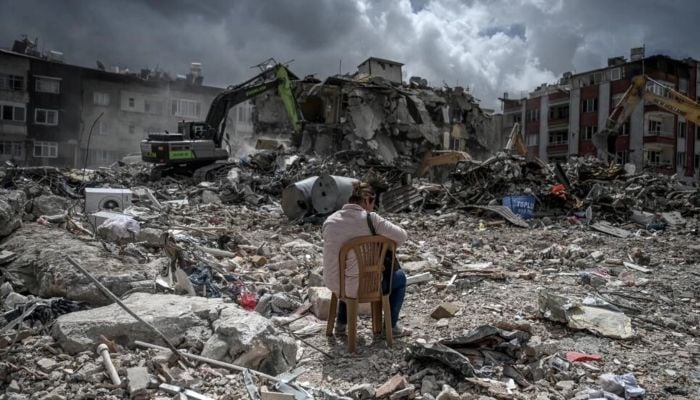
Last year's February 6 disaster killed nearly 60,000 people and erased swathes of cities across Turkey and parts of Syria. AFP Photo
Turkey on Tuesday holds pre-dawn vigils for the loss of more
than 50,000 people – and parts of entire cities – in the earthquake-prone
country's deadliest disaster of modern times.
Grieving Turks are still coming to terms with how a
7.8-magnitude tremor could upturn the lives of millions of people in a matter
of seconds while they were still asleep.
An updated toll released Friday showed that 53,537 people
had died across 11 southeaster provinces officially designated as the disaster
zone.
The confirmed loss of 5,951 more lives in neighbouring Syria
makes last year's February 6 earthquake one of the 10 deadliest in the world in
the past 100 years.
Ancient cities such as Antakya have been effectively wiped
off the map.
Others have gaping holes in place of apartment towers that
toppled like houses of cards when the ground began to move at 4:17 am.
Shellshocked survivors stood outside in the freezing cold in
their pyjamas and listened to those trapped under concrete slabs of debris
scream in agonising pain.
"It's been a year, but it doesn't leave our
minds," housewife Cagla Demirel told AFP in one of the container camps set
up for hundreds of thousands of survivors in Antakya.
"Life has lost its spark," the 31-year-old said.
"I have no family left to visit, no door to knock on, no pleasant place to
be. Nothing remains."
'Can you hear us?'
Antakya's remaining residents plan to gather on Tuesday at
4:17 am for a vigil that will see everyone cry out: "Can you hear
us?"
The call became ubiquitous across the disaster zone as
people searched for loved ones in the rubble.
But it also appears to be a nuanced reminder for President
Recep Tayyip Erdogan's government that many in the quake zone feel left behind.
Analysts at the Economic Policy Research Foundation of
Turkey (TEPAV) point out that the disaster struck an area already weighted down
by unemployment and underinvestment.
"Some districts in the region have the highest poverty
rate in Turkey," TEPAV said in a report.
Erdogan pushed back hard against complaints that government
rescuers were unprepared and slow to respond.
He has branded the quake "the catastrophe of the
century" that no nation could have averted or quickly overcome.
He crisscrossed the nation in the first weeks of the
disaster and promised to deliver 650,000 new housing units within a year.
'No return to normal'
He began to hand out keys in Antakya on Saturday for the
first 7,000 apartments of the 46,000 ready to be delivered across the quake
zone this month.
He said up to 20,000 units would be delivered monthly and
200,000 by the end of the year – short of his initial promise but still
impressive for a region hit by post-quake chaos.
"Of course, we cannot bring back the lives we lost, but
we can compensate all the other losses," Erdogan told Antakya residents on
Saturday.
"We made promises to do so."
But Erdogan's words offer little solace to people such as
ice cream vendor Kadir Yeniceli.
The 70-year-old native of Kahramanmaras – a hard-hit city
where Erdogan's Islamic-rooted party enjoys overwhelming support – said people
feel "confused" about what happens next.
"There has been no return to normal," Yeniceli
told AFP. "It remains the same, there is no progress. There is a lack of
employment, there is a lack of money, there is a lack of income."
'Much to be done'
Erdogan's housing pledges came in the runup to a May 2023
general election that turned into the toughest of his two-decade rule.
He prevailed in a runoff presidential ballot thanks to
consistent support across much of the disaster zone.
Many voters expressed a lack of trust in the opposition and
thought Erdogan's government was doing the best anyone could do under the
circumstances.
But many voters and analysts point out that Turkey is no
better prepared for another big shake than it was one year ago.
The country straddles two of the world's most active fault
lines and is rattled almost daily by more minor quakes.
And hundreds of contractors are currently facing prosecution
for allegedly skirting the building safety standards already in place.
"The country urgently needs to transition from crisis
management to risk management," said Istanbul Technical University
disaster management professor Mikdat Kadioglu.
"There is still much to be done."
/KN/

