Rohingya genocide hearing begins
Online Desk
10 Dec 2019 04:15 AM । Update: 10 Dec 2019 04:28 AM
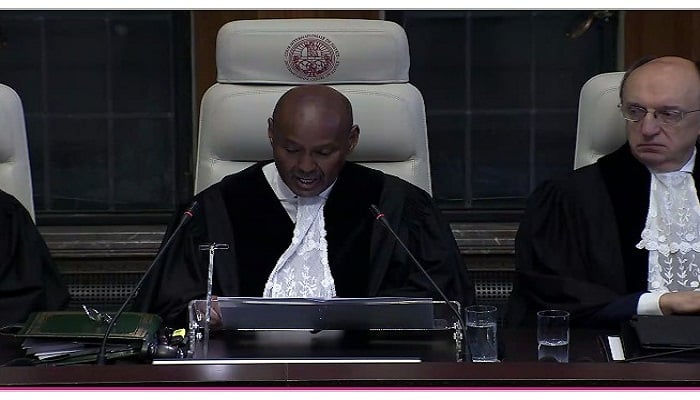
The hearing of the historic case of Rohingya genocide began at 3:00 pm (Bangladesh time) at the Peace Palace in The Hague of Netherlands on Tuesday.
Calendar of hearings and events
Application of the Convention on the Prevention and
Punishment of the Crime of Genocide (The Gambia v. Myanmar) - Request for the
indication of provisional measures - The Court will hold public hearings from
Tuesday 10 to Thursday 12 December 2019.
Tuesday 10 December 2019: 10 a.m.-1 p.m.: Republic of The
Gambia
Wednesday 11 December 2019: 10 a.m.-1 p.m.: Republic of the
Union of Myanmar
Thursday 12 December 2019: 10 a.m.-11.30 a.m.: Republic of
The Gambia
Thursday 12 December 2019: 4.30 p.m.-6 p.m.: Republic of the Union of Myanmar
Members of Myanmar’s Rohingya Muslim minority prayed for justice on the eve of hearings at the U.N.’s International Court of Justice during which leader Aung San Suu Kyi will defend the country against genocide charges, reports Reuters.
Gambia launched proceedings against the Buddhist-majority Myanmar in November, accusing it of violating its obligations under the 1948 Genocide Convention. It is only the third genocide case filed at the court since World War Two.
During three days of court proceedings Suu Kyi, a Nobel Peace laureate, is expected to repeat denials of genocide and argue that military operations in question were a legitimate counterterrorism response to attacks by Rohingya militants.
This week’s proceedings before a panel of 17 judges will not deal with the core allegation of genocide, but Gambia has requested a court order for Myanmar to halt any activity that may aggravate the dispute.
Gambia will argue that Myanmar’s forces carried out widespread and systematic atrocities under a campaign known as “operation clearance”, from August 2017 that constituted genocide.
Its court petition accused Myanmar of genocidal acts “intended to destroy the Rohingya as a group, in whole or in part, by the use of mass murder, rape and other forms of sexual violence, as well as the systematic destruction by fire of their villages, often with inhabitants locked inside burning houses.”
More than 730,000 Rohingya fled Myanmar in 2017 after the military-led crackdown and were forced into squalid camps across the border in Bangladesh.
Hasina Begum, 22, said she was among many women raped by Myanmar soldiers who also burned down her village.
“They have done these things to me, to my relatives and my friends. I can tell them face to face, looking them in the eyes, because I am not lying,” she told Reuters.
Leaving the refugee camp in Bangladesh for the first time since she fled, Hasina arrived in The Hague on Monday with two other victims and an interpreter.
“I feel great,” Hasina said from her hotel room on the eve of hearings. “Myanmar military raped many of our women. We want justice with the help of the international community.”
Back at the camp, some Rohingya said they were praying to see justice delivered, while others posted on Twitter that they intended to fast to mark the event.
The United Nations has said the campaign was executed with “genocidal intent.” While the United States stopped short of calling it genocide, it said the acts amounted to “ethnic cleansing” and imposed sanctions against military leaders.
Gambia, a tiny, mainly Muslim West African country, will argue that by either enabling or failing to prevent genocide Myanmar failed to meet its requirements under the convention.
The tribunal, also known as the World Court, has no enforcement powers, but its rulings are final and have significant legal weight.

